
fathimashahana.com

Author name: shahanafathima2373@gmail.com

Ai Digital Marketing Strategist in Malappuram
Uncategorized

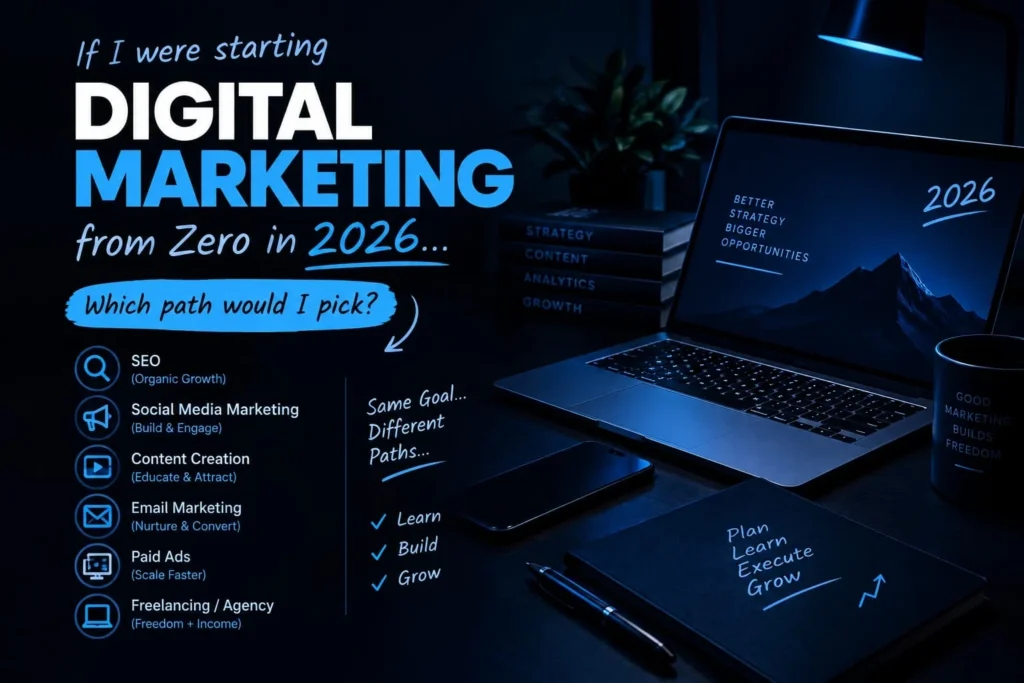
If you were starting digital marketing from zero in 2026, which path would you pick?

If I Were Starting Digital Marketing From Zero in 2026, Here’s Exactly What I’d Do Every year someone tells me digital marketing is “too saturated now.” Every year they’re wrong — the field just keeps shifting shape. In 2026 it’s shifted again, hard, around AI. But here’s the thing nobody says loudly enough: AI hasn’t replaced marketers, it’s replaced the marketers who refused to specialize. So if I were starting today, dead broke, zero experience, this is the path I’d actually take — not the “10 skills you need” listicle version, the real one. Step 1: Pick one lane, not five The old advice was “learn a bit of everything — SEO, ads, email, social.” Skip that. Spreading thin used to be a decent strategy when the bar was low. It isn’t anymore. I’d pick one specialty — content, paid ads, or email/lifecycle marketing — and go deep before going wide. Depth is what gets you hired now; breadth is what AI tools already do for free. Step 2: Get functional with AI tools immediately, not eventually Not “learn about AI” in the abstract. Actually use it daily — for drafting copy, analyzing data, building ad variations, researching keywords. The skill that matters in 2026 isn’t knowing AI exists, it’s knowing how to direct it well enough that your output beats someone else’s raw prompt. Employers aren’t asking “do you know AI” anymore, they’re asking “can you get better results with it than the next candidate.” Step 3: Build one real thing, not a portfolio of theory Start a blog, a small Instagram page, a newsletter — anything with a real audience, even an audience of twelve people. Run actual campaigns on it. Track actual numbers. A messy real project with honest results beats a polished fake case study every time an interviewer asks a follow-up question. Step 4: Learn to read data, not just collect it Anyone can pull a report. The people who get promoted are the ones who can look at a dashboard and say “this number means we should stop the campaign” or “this is why conversions dropped Tuesday.” That instinct is learnable, but only through repetition — so tie it back to Step 3. Your own project is where you practice this cheaply. Step 5: Get one credible certification, don’t collect them A single relevant certification (Google Ads, Meta Blueprint, or one from your chosen specialty) is enough to signal legitimacy. Stacking ten badges from random platforms reads as busywork, not expertise. Step 6: Network like you mean it Comment on posts, DM people doing the work you want to do, ask specific questions instead of “can you mentor me.” One honest conversation with someone a few steps ahead of you is worth more than a month of tutorials.If I had to compress this into one sentence: specialize early, get hands-on with AI immediately, and prove it with something real — everything else is noise dressed up as strategy.
Ai Digital Marketing Strategist in Malappuram
Uncategorized

Complete beginner in digital marketing where should i sta

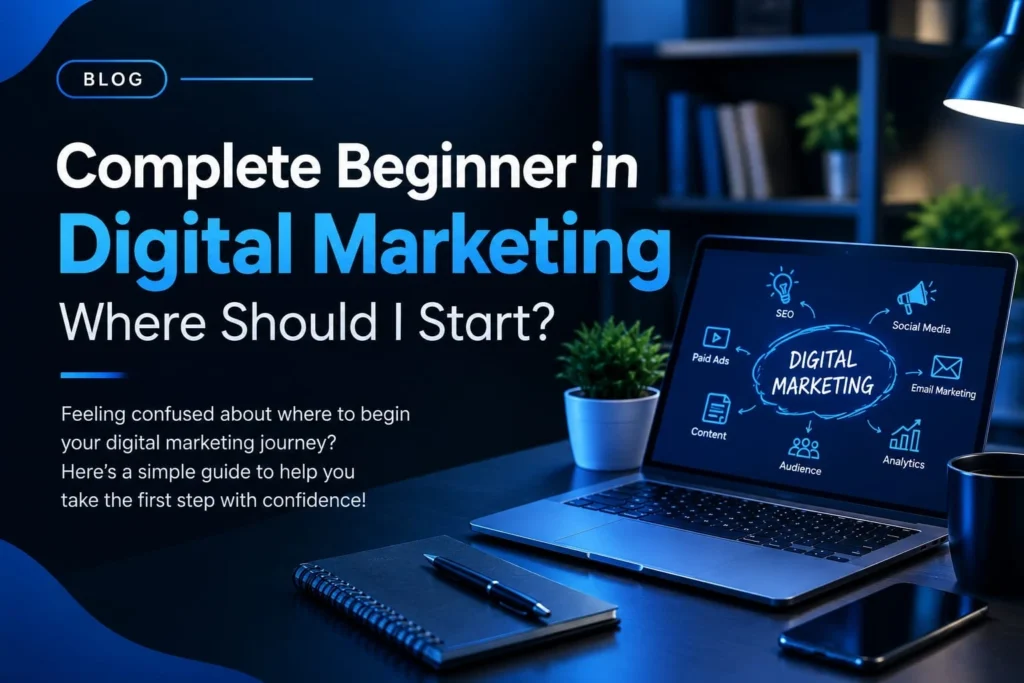
Complete beginner in digital marketing where should i start New to Digital Marketing? Here’s Exactly Where to Start Let’s be honest — the phrase “digital marketing” gets thrown around so much that it’s easy to feel like everyone else already knows what they’re doing and you’re the only one still confused. You’re not. Most people who are “good” at this today started exactly where you’re standing: overwhelmed by acronyms, unsure whether to learn SEO first or just jump into ads, and wondering if they need a fancy certification before they’re allowed to touch a business’s social media page.You don’t. Here’s the real starting point. Stop Trying to Learn “Digital Marketing.” Learn One Piece of It. The biggest mistake beginners make is treating digital marketing like one subject. It isn’t. It’s a collection of separate skills — content writing, SEO, email marketing, paid ads, social media, analytics — that happen to overlap. Trying to absorb all of them at once is how people burn out in week two.Pick one lane first. If you enjoy writing, start with content and SEO. If you like numbers and testing things, paid advertising might suit you better. If you’re naturally chatty and enjoy building an audience, social media is your entry point. There’s no wrong choice here — the goal is momentum, not perfection. The Foundations Nobody Should Skip Regardless of which lane you pick, a few basics apply to everyone: How search engines actually work. You don’t need to be a technical SEO expert, but understanding why Google ranks one page over another will inform almost every decision you make later.Basic analytics. Learning to read traffic and engagement numbers — even at a surface level — turns guesswork into strategy.Audience thinking. Every good campaign starts with “who am I actually talking to?” not “what do I want to say?”If you get comfortable with just these three things, you’ll already be ahead of a lot of people who jump straight into tools without understanding the logic behind them. Learn by Doing, Not by Bookmarking Courses and YouTube tutorials are useful, but they’re not where real learning happens. Real learning happens when you start a small blog, run a $5 ad campaign, or manage a social page — even a personal one — and watch what actually works versus what you assumed would work.Set up a free website or blog. Write a handful of posts. Track what gets read and what doesn’t. This single habit will teach you more in a month than six months of passive video-watching. Where People Get Stuck (and How to Get Unstuck) A lot of beginners hit a wall after the first few weeks — not because the subject is too hard, but because they’re learning in isolation, without feedback. This is exactly the gap that separates someone dabbling in marketing from the best digital marketing strategists in the field: the ones who got ahead usually had mentors, communities, or case studies to learn from instead of guessing alone.If you’re serious about building this skill long-term, it’s worth studying how experienced strategists actually think — not just what tools they use, but how they diagnose a problem before choosing a tactic. That mindset shift, more than any certification, is what eventually makes someone genuinely good at this. A Simple 30-Day Starting Plan If you want structure instead of just advice, here’s a straightforward path:Week 1 — Learn the basics of SEO and how search intent works.Week 2 — Set up a blog or social page and publish consistently, even if it feels small.Week 3 — Learn basic analytics (Google Analytics or a simple dashboard) and track what you published.Week 4 — Pick one paid channel (even a tiny budget) and run your first test campaign.By the end of the month, you won’t be an expert — nobody is after 30 days — but you’ll have real, hands-on experience instead of theory sitting in your notes app. The Honest Truth Digital marketing rewards consistency more than talent. The people who succeed aren’t necessarily the smartest in the room — they’re the ones who kept publishing, kept testing, and kept adjusting when something didn’t work. Give yourself permission to be bad at this for a little while. Everyone was, including the people you’re learning from now.Start small. Start messy. Just start.

Ai Digital Marketing Strategist in Malappuram
Uncategorized

What is Digital Marketing? A Simple Explanation For Real People

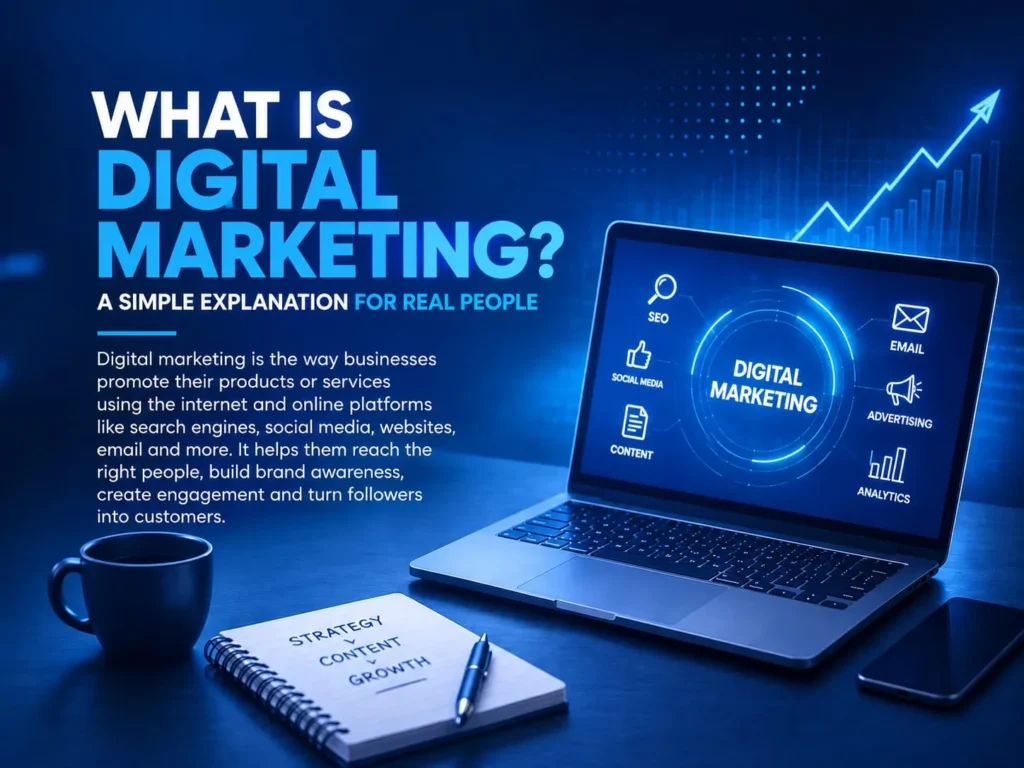
What is Digital Marketing ? A Simple Explanation For Real People What Is Digital Marketing? A simple Explanation For Real People . Ask  ten people what Digital Marketing means and you”ll probably get ten different answers.Some will say it’s “posting on Instgram.”Others will mention Google ads. A few will just shrug and say “it’s basically online marketing,” which isn’t wrong, but it doesn’t really tell you much either.So let’s actually break it down in plain language, without the jargon that usually makes this topic sound more complicated than it is. The Simple Version Digital marketing is the practice of promoting a product, service, or brand using the internet instead of traditional methods like TV, print, or billboards. That’s really the core of it. Instead of putting an ad in a newspaper, you’re running it on Facebook. Instead of handing out flyers, you’re sending an email to a list of subscribers. Same basic goal, different tools.What makes it different from old-school advertising isn’t just the medium, though. It’s the feedback loop. With a billboard, you put it up and hope people notice. With digital marketing, you can watch in real time whether people are clicking, buying, ignoring, or scrolling right past your message. That data changes everything about how marketing gets done. The Main Pieces That Make It Up Digital marketing isn’t one single skill. It’s a collection of different channels, each doing a slightly different job. Search Engine Optimization (SEO) is about getting your website to show up when someone searches for something related to your business on Google. It’s slow, it takes patience, but it brings in people who are already looking for what you offer.Content marketing covers blogs, videos, guides, and anything else designed to inform or entertain your audience rather than directly sell to them. Done well, it builds trust before someone ever considers buying. Social media marketing is exactly what it sounds like: building a presence on platforms like Instagram, TikTok, or LinkedIn to connect with people where they already spend their time.Paid advertising, sometimes called PPC (pay-per-click), is when you pay platforms like Google or Meta to show your ads to a specific audience. It’s the fastest way to get visibility, though it stops working the moment you stop paying.Email marketing is still one of the most underrated channels out there. A well-timed email to the right list often outperforms flashier tactics, simply because it reaches people who already chose to hear from you.Analytics and data tracking ties everything together. This is how you know what’s actually working instead of guessing.None of these pieces work in isolation. The businesses that grow the fastest usually combine a few of them rather than relying on just one.Why It Matters So Much Right NowA few decades ago, a business could get by with word of mouth and a Yellow Pages listing. That world doesn’t exist anymore. Most people now research a product online, check reviews, compare prices, and often make a decision before they ever speak to an actual salesperson.If your business isn’t visible in that research process, you’re simply not part of the conversation. It doesn’t matter how good your product is if nobody finds out about it. That’s the blunt reality digital marketing exists to solve.This is also why more businesses are actively searching for the best digital marketing strategist to guide their online presence, rather than trying to handle everything themselves. The channels above sound simple individually, but coordinating them well, and adjusting based on real data, takes experience most business owners don’t have time to build on their own. A Common Misunderstanding A lot of people assume digital marketing means constantly posting content and hoping something goes viral. That’s not really how it works, and chasing virality is usually a waste of energy for most businesses.Good digital marketing is closer to running a series of small, deliberate experiments. You test a headline, see how it performs, adjust it. You try a new ad audience, measure the result, refine it again. Growth in this field rarely comes from one lucky post. It comes from steady, informed adjustments made over time. Where Beginners Usually Go Wrong The biggest mistake newcomers make is trying to be active on every single channel at once. Posting on five social platforms, running ads, writing blog posts, and sending emails, all starting in the same week, usually ends in burnout and mediocre results across the board.It’s far more effective to pick one or two channels that make sense for your specific audience and get genuinely good at them before adding more. A local bakery probably gets more value from strong local SEO and an active Instagram page than from investing heavily in enterprise-level ad campaigns, for instance. The Bottom Line Digital marketing, at its core, is simply meeting people where they already are: on search engines, in their inbox, and scrolling through their phones, and giving them a reason to pay attention to what you offer. The channels and tools will keep changing, they always do, but that basic principle hasn’t moved in years and probably won’t anytime soon.If you’re just getting started, don’t try to master everything at once. Pick a channel, learn it properly, and build outward from there. That approach, more than any tool or trend, is what eventually separates a business that struggles online from one that works with what people would call the best digital marketing strategist in their space.  

Scroll to Top